Tokenized real-world assets are moving from experimentation into institutional finance workflows.
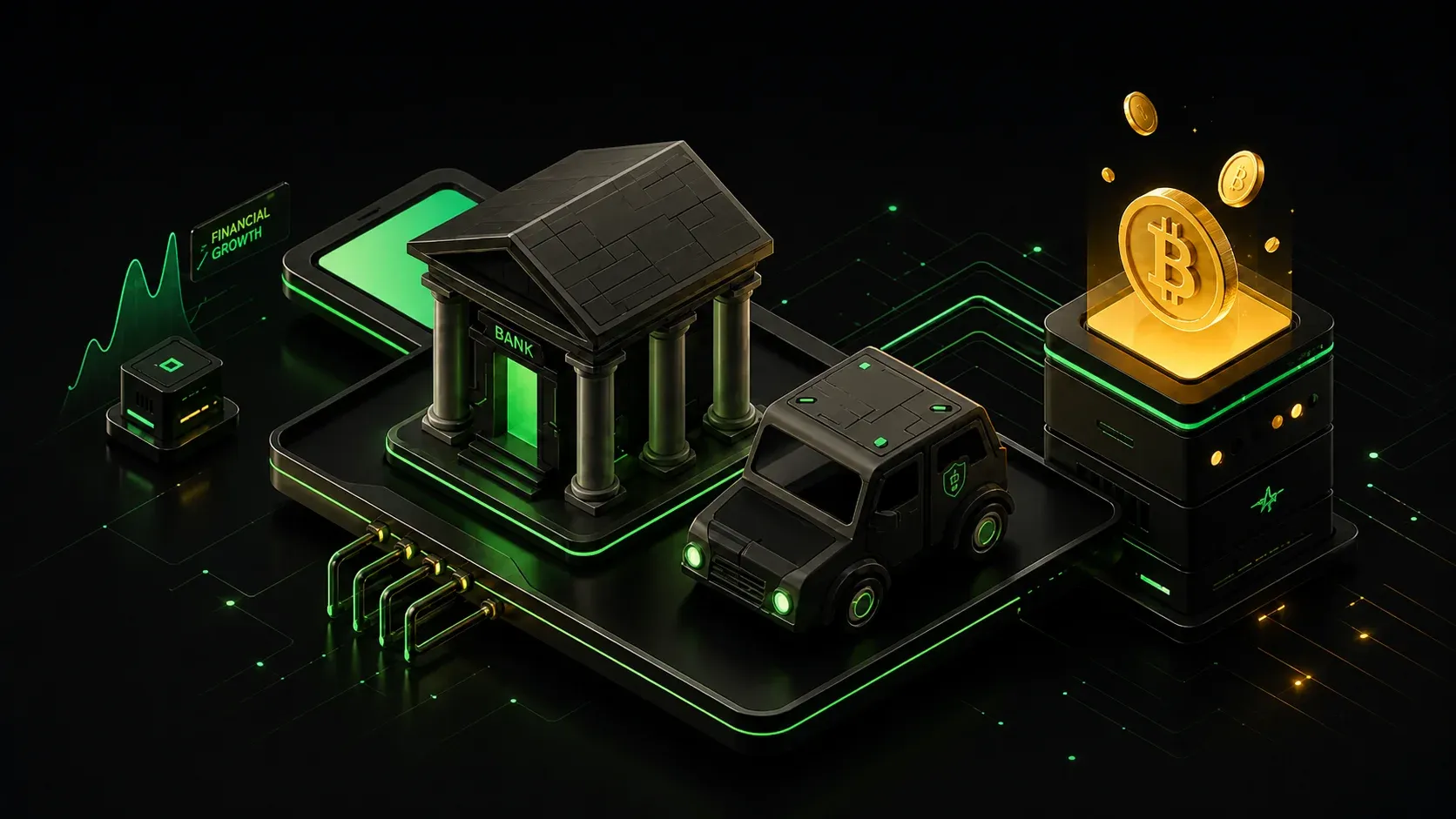
The clearest signal came in late April 2026, when OKX, BlackRock, and Standard Chartered launched a framework that allows eligible clients to use BlackRock’s tokenized short-term U.S. Treasury fund, BUIDL, as collateral while assets remain in regulated off-exchange custody. Standard Chartered said it would provide custody, while OKX would accept BUIDL as yield-bearing collateral for trading.
This is not just another blockchain pilot. It shows tokenized assets being used for a specific institutional function: collateral management.
Why Tokenized Treasuries Matter
Tokenized real-world assets, often called RWAs, are blockchain-based representations of traditional financial assets such as Treasuries, money market funds, bonds, private credit, commodities, or real estate.
The early institutional use case is not glamorous. It is not tokenized skyscrapers or retail trading of every asset class. It is short-term government debt and money market-style products.
That is exactly why it matters.
Treasuries and money market funds are already widely used in institutional finance. Tokenizing them can make them more programmable, transferable, and usable as collateral inside digital trading and settlement environments.
Standard Chartered said the new OKX, BlackRock, and Standard Chartered framework scales the utility of tokenized real-world assets and enables broader market participation. It also described the structure as the first G-SIB-backed off-exchange tokenized collateral framework.
BlackRock’s BUIDL Becomes More Than a Tokenized Fund
BlackRock’s BUIDL fund is central to the story.
Securitize describes BUIDL as the BlackRock USD Institutional Digital Liquidity Fund, available through Securitize.
Securitize also announced that BUIDL surpassed $1 billion in assets under management, showing that tokenized funds are no longer only proof-of-concept products.
The new collateral framework adds another layer of utility. Instead of investors only holding a tokenized Treasury fund, eligible institutional clients can use that tokenized exposure as collateral in trading workflows while keeping assets with a regulated custodian.
Reuters reported that the framework is designed to reduce the need for clients to transfer assets between a custodian and a trading venue, while maintaining protections outside the exchange.
That is the business case: better capital efficiency without giving up institutional custody standards.
Standard Chartered’s Role Shows Why Banks Matter
The role of Standard Chartered is important because it shows tokenization is not bypassing traditional finance entirely.
In the framework, Standard Chartered provides custody. That gives institutional clients a structure that combines blockchain-based collateral with bank-grade custody and off-exchange risk management.
This is how institutional adoption is likely to happen: not by replacing banks overnight, but by embedding tokenized assets inside regulated financial workflows.
For banks, this creates a new opportunity. They can become custodians, settlement agents, tokenization partners, compliance providers, and collateral infrastructure operators.
Franklin Templeton Shows the Market Has Been Building for Years
Tokenized RWAs did not appear suddenly in 2026.
Franklin Templeton says it launched the first tokenized money market fund in April 2021, and that the product has been operating 24/7/365 through its Benji Technology Platform, with total assets under management nearing US$1.5 billion.
That history matters. It shows that tokenized funds have been slowly building operational credibility before becoming a mainstream institutional theme.
Franklin Templeton’s framing also helps explain why tokenization is attractive: the goal is not simply to put assets on a blockchain, but to create financial instruments that can operate with more transparency, automation, and digital-native settlement.
What Tokenization Actually Improves
Tokenization can improve financial infrastructure in several practical ways.
First, it can support faster settlement. Traditional securities settlement often involves multiple intermediaries and time delays. Tokenized assets can move more quickly inside compatible systems.
Second, it can improve collateral mobility. If tokenized assets can be used as collateral without being moved between venues, institutions may reduce operational friction.
Third, it can create better transparency. Blockchain-based records can make ownership, transfers, and asset movement easier to audit, depending on design and regulation.
Fourth, it can support programmable finance. Tokenized assets can be integrated into smart contracts, trading systems, payment workflows, and automated collateral controls.
But tokenization is not magic dust. Institutional adoption still depends on regulation, custody, investor eligibility, liquidity, accounting treatment, cybersecurity, and interoperability.
Why This Matters for B2B Finance
For B2B finance teams, tokenized real-world assets matter because they point toward a more programmable financial system.
Corporate treasury teams may eventually use tokenized money market funds, tokenized deposits, or tokenized Treasuries for liquidity management. Asset managers may use tokenization to improve distribution, settlement, and product design. Banks may use tokenized collateral to reduce friction in trading and clearing. Exchanges and trading platforms may use RWAs to make collateral more efficient.
The market is still early, but the direction is becoming clearer: tokenization is moving from “can this exist?” to “where does this improve workflow?”
The Business Takeaway
Tokenized real-world assets are entering institutional finance through practical use cases, not hype.
The OKX, BlackRock, and Standard Chartered collateral framework shows that tokenized Treasuries can be used in trading workflows with regulated custody. BlackRock’s BUIDL scale and Franklin Templeton’s Benji history show that tokenized funds are becoming credible financial products rather than isolated experiments.
For FinanceInsyte readers, the key insight is this: tokenization is not about turning every asset into a speculative token. It is about making financial assets more usable inside digital infrastructure.
The next phase of institutional finance may not be fully on-chain. But more of its collateral, settlement, and liquidity plumbing will be.
FAQ
What are tokenized real-world assets?
Tokenized real-world assets are digital representations of traditional assets such as Treasuries, money market funds, bonds, real estate, or private credit on blockchain-based infrastructure.
Why is the BlackRock, Standard Chartered, and OKX framework important?
It allows eligible institutional clients to use BlackRock’s BUIDL tokenized Treasury fund as collateral while keeping assets in regulated off-exchange custody.
Are tokenized assets already institutional-scale?
Some tokenized funds have reached meaningful scale. Securitize said BlackRock’s BUIDL surpassed $1 billion in assets under management, while Franklin Templeton says its tokenized money market fund has operated since 2021 through Benji.
Source Pack
- Standard Chartered official announcement: use for the OKX, BlackRock, and Standard Chartered framework using BlackRock’s BUIDL tokenized Treasury fund as collateral.
- Reuters on Standard Chartered, BlackRock, and OKX: use as trusted third-party validation of the collateral framework and institutional RWA utility.
- Securitize BUIDL page: use for BlackRock BUIDL product context and tokenized fund positioning.
- Securitize announcement on BUIDL surpassing $1B AUM: use for scale and institutional adoption context.
- Franklin Templeton RWA tokenization article: use for historical context on tokenized money market funds, Benji platform, and the broader RWA thesis.