
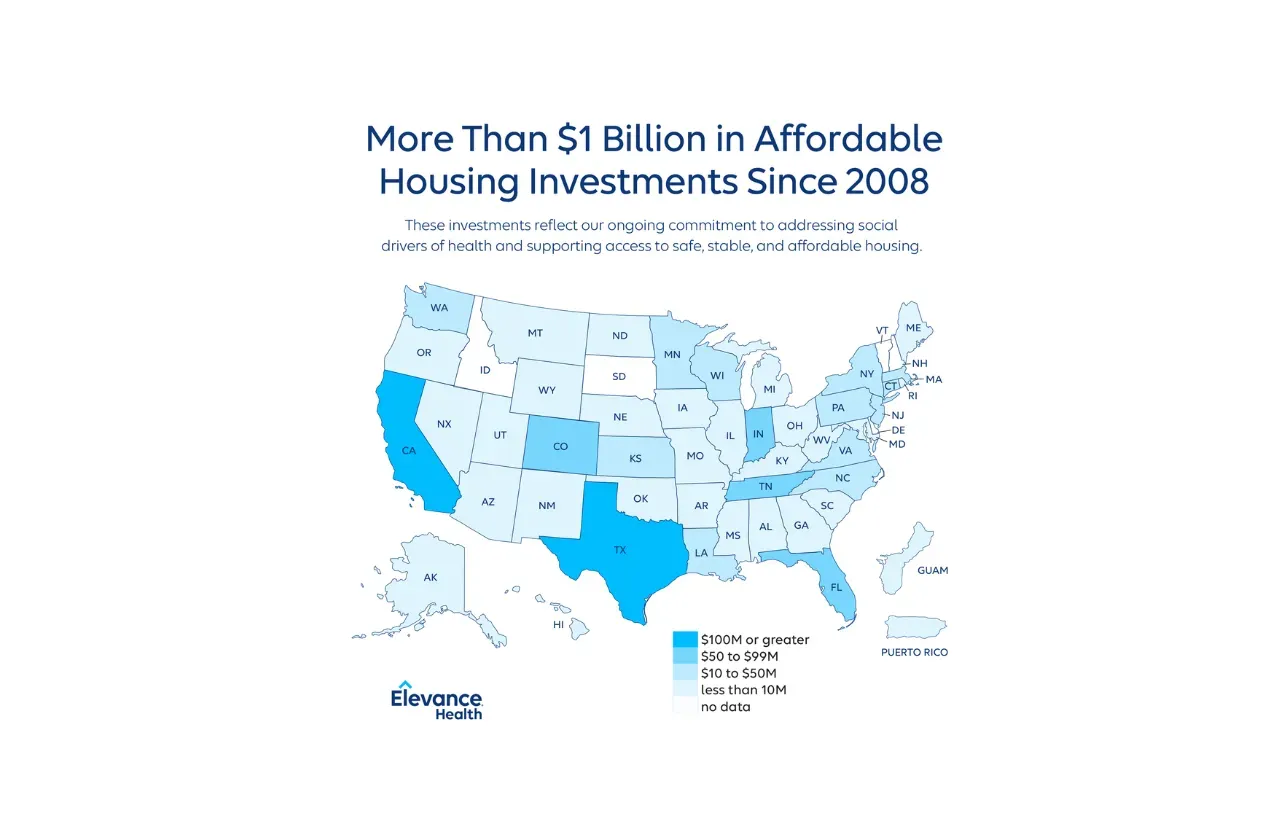
Elevance Health (NYSE: ELV) announced that it has invested $640 million in affordable housing over the past five years, bringing its cumulative commitment since the late 2000s to more than $1 billion. The capital has been directed toward the development of 2,654 new units across 15 properties in 10 states, and it sits within the company’s broader “whole‑health” strategy that treats stable, safe housing as a core social determinant of health. By linking housing to health outcomes, Elevance aims to lower overall care costs for Medicaid and other vulnerable members, improve community wellbeing, and create a replicable model for other health insurers. The announcement underscores a long‑term, data‑driven approach: internal analyses showed that 43 percent of Medicaid members with more than 50 emergency‑room visits per year were experiencing homelessness, a stark illustration of how housing instability drives avoidable utilization. As Aimée K. Dailey, president of Government Health Benefits, put it, “Access to safe and stable housing is fundamental to improving health outcomes and building stronger communities.”
Elevance Health’s $640 Million Housing Investment
Over the five‑year period covered by the latest disclosure, Elevance Health allocated $640 million to create 2,654 affordable housing units that include apartment homes, townhomes, and single‑family residences. These units are spread across 15 properties in 10 states, reflecting a geographically diverse portfolio that mirrors the company’s nationwide member base. When combined with earlier spending, Elevance’s total investment exceeds $1 billion and now spans approximately 400 properties, supporting more than 40,000 housing units in 45 states, the District of Columbia, Puerto Rico, and Guam.
The company’s investment model focuses on high‑impact developments that can be paired with local partners—housing authorities, community‑based organizations, and health‑plan affiliates—to ensure that each project is tailored to the specific needs of the surrounding population. By concentrating resources on properties that serve low‑ to moderate‑income households, Elevance seeks to generate measurable health improvements while also delivering a modest financial return through reduced emergency‑room utilization and lower inpatient costs.
Context: Housing Instability and Health Utilization
Housing instability remains one of the most pressing challenges to health equity in the United States. The U.S. Department of Housing and Urban Development reported that more than 653,000 people experienced homelessness in 2023, including families with children, highlighting the scale of the problem. For Elevance Health’s Medicaid members, the link between housing and health is especially acute. Internal analysis of plan members with high health‑care utilization revealed that 43 percent of those with more than 50 emergency‑room visits per year were homeless, underscoring a direct correlation between lack of stable housing and costly, preventable medical encounters.
Elevance’s whole‑health framework positions housing alongside other social and environmental factors—such as food security, transportation, and behavioral health—as essential inputs that shape health trajectories. By addressing these upstream drivers, the company aims to shift care from reactive, high‑cost services to proactive, preventive interventions that keep members healthier and reduce overall spend.
Targeted Support for Vulnerable Residents
The affordable‑housing projects are deliberately designed for households earning 80 percent or less of the area median income, with rent caps that keep housing costs at no more than 30 percent of household income. This affordability threshold helps prevent financial strain that can otherwise lead to eviction or homelessness. The developments prioritize seniors, people with disabilities, and families at risk of losing housing, including individuals with intellectual or developmental disabilities who often require additional supportive services.
Beyond the physical units, Elevance operates flexible funding programs that have assisted roughly 1,500 households with critical expenses such as security deposits, overdue rent, and utility bills. These programs are staffed by housing coordinators who work directly with members to navigate local resources, apply for vouchers, and connect with eviction‑prevention services. In a state‑based pilot, more than 90 percent of participants maintained stable housing six months after receiving support, demonstrating the tangible impact of combining financial assistance with case management.
Delivering Innovative, Community‑Based Housing Solutions
Elevance leverages its affiliated Medicaid plans to embed housing resources within the broader health‑care delivery system. Through partnerships with community‑based organizations, local housing authorities, and nonprofit developers, the company ensures that each project aligns with community‑specific needs and regulatory environments. For example, some sites incorporate on‑site health‑clinic space, wellness programming, and care‑coordination services that address chronic conditions such as diabetes, asthma, and hypertension—conditions that are often exacerbated by unstable living conditions.
The company’s approach also emphasizes data‑driven outcomes. By tracking metrics such as emergency‑room visit frequency, hospital admission rates, and medication adherence before and after housing placement, Elevance can quantify the health and cost benefits of its investments. Early results suggest that residents of these affordable units experience fewer costly ER visits, better chronic‑disease management, and improved mental‑health indicators, though the company has not yet released a full longitudinal study.
Integrating Health and Community‑Based Support
In select markets, Elevance extends its housing initiatives to include integrated health and social services. Residents may gain access to primary‑care appointments, behavioral‑health counseling, nutrition programs, and transportation assistance—all coordinated through a dedicated community health team. This holistic model seeks to remove the barriers that typically separate health care from social support, fostering a seamless experience that encourages preventive care and early intervention.
Dr. Adrienne McFadden, chief medical officer of Government Health Benefits, emphasized that “affordable housing is a critical foundation for improving quality of life and strengthening communities.” By aligning housing investments with health‑service delivery, Elevance hopes to create sustainable solutions that not only provide a roof over a person’s head but also lay the groundwork for long‑term health stability and reduced reliance on acute care.
Looking Ahead
Elevance Health has signaled that its affordable‑housing portfolio will continue to expand, with future projects planned in additional states and territories. The company intends to align new investments with state and community priorities, focusing on regions where Medicaid enrollment is high and housing shortages are most acute. While specific timelines and financial forecasts have not been disclosed, the firm’s leadership suggests that ongoing capital deployment will remain a central pillar of its whole‑health agenda, aiming to lower avoidable health‑care costs while building healthier, more resilient communities across the nation.
Key Takeaways
- Elevance Health invested $640 million in affordable housing over the past five years, adding to a total commitment of more than $1 billion since the late 2000s.
- The recent funding supports 2,654 new units across 15 properties in 10 states, contributing to a portfolio of over 40,000 units in 45 states, D.C., Puerto Rico, and Guam.
- Internal data show 43 percent of Medicaid members with >50 ER visits annually were homeless, underscoring the health‑cost rationale for the housing investments.
FinanceInsyte's Take
Elevance Health’s expanded housing spend reinforces its strategy of integrating social determinants into health‑risk management, a move that could help mitigate avoidable utilization for high‑cost Medicaid members. The company has not disclosed the expected timeline for future investments or the specific financial impact on its operating model, leaving buyers to watch how these community‑based initiatives translate into measurable cost savings and health outcomes.
Source: Businesswire